The Semiconductor Supply Chain: Why Taiwan Still Keeps the World Awake at Night
July 10, 2025·Aperta Res Research·
Share
A Single Point of Failure
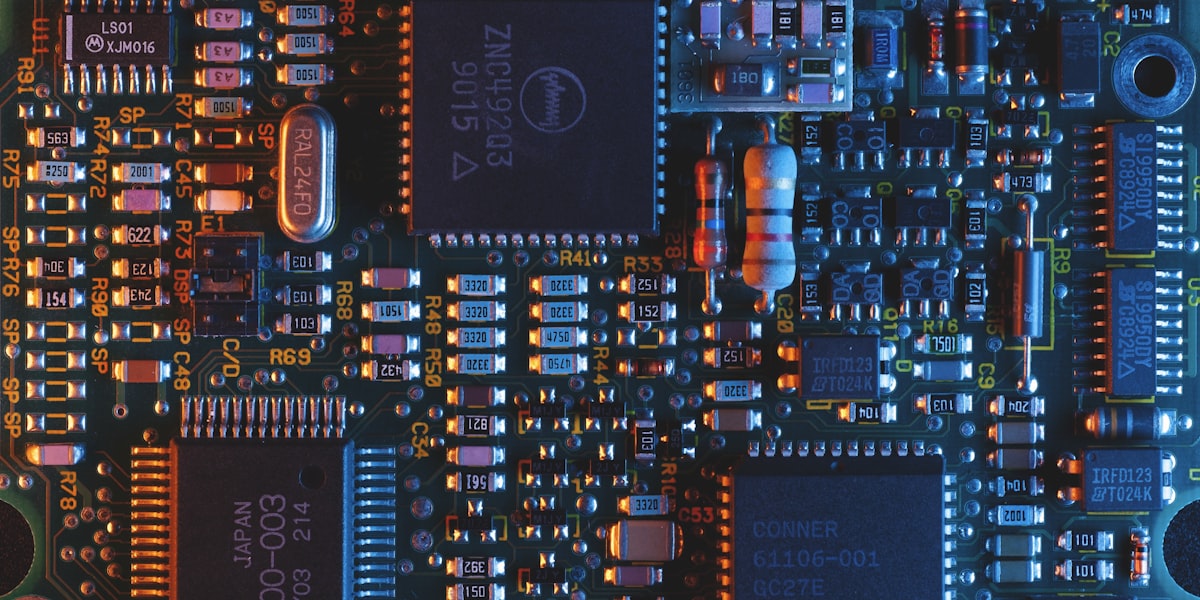
The world's most critical supply chain runs through a 14,000-square-mile island in the western Pacific. Taiwan Semiconductor Manufacturing Company (TSMC) fabricates approximately 90% of the world's most advanced semiconductors — the chips that power everything from iPhones to F-35 fighter jets to the AI models reshaping the global economy.
This concentration of capability represents what national security analysts call a "single point of failure" for the global technology ecosystem. And it sits 100 miles from a superpower that claims sovereignty over it.
The CHIPS Act: America's Response
The United States' CHIPS and Science Act, signed in 2022, committed $52.7 billion to domestic semiconductor manufacturing. Three years in, the results are mixed:
TSMC's Arizona fab is operational but producing chips one generation behind Taiwan's cutting edge
Intel's Ohio mega-fab remains under construction with a delayed timeline
Samsung's Texas facility has faced repeated setbacks
"You cannot replicate 40 years of semiconductor ecosystem development with a single act of Congress."
The challenge isn't just money — it's talent, institutional knowledge, and the dense network of specialized suppliers that makes Taiwan's semiconductor cluster uniquely productive.
China's Parallel Gambit
Beijing is pursuing its own semiconductor independence with even greater urgency. China's Big Fund III, launched in 2024 with $47.5 billion in capital, represents the largest single investment in semiconductor self-sufficiency in history.
Chinese firms like SMIC have made progress at mature nodes (7nm and above), but remain multiple generations behind TSMC at the leading edge. US export controls on advanced lithography equipment — particularly ASML's EUV machines — have created a bottleneck that Chinese engineers haven't been able to circumvent.
The Taiwan Strait Scenario
Military analysts increasingly model scenarios involving a Chinese blockade or invasion of Taiwan. The semiconductor implications would be catastrophic:
Immediate global chip shortage far worse than the 2020-2022 crisis
Estimated $1-2 trillion in annual global GDP losses
Years-long disruption to automotive, consumer electronics, defense, and AI industries
TSMC's own contingency planning includes what insiders call the "poison pill" — the knowledge that their fabs could be rendered inoperable in the event of a military takeover, denying China the capability it seeks to capture.
Diversification Is Necessary but Insufficient
The honest assessment is sobering: full supply chain diversification away from Taiwan will take at least a decade and may never fully replicate Taiwan's cost and quality advantages. The global economy must simultaneously:
Accelerate domestic fab construction in the US, EU, and Japan
Maintain diplomatic stability across the Taiwan Strait
Invest in alternative chip architectures that reduce dependence on leading-edge nodes
Build strategic chip reserves for critical industries
The semiconductor supply chain is the geopolitical issue of our era. How it evolves will shape the balance of power for decades to come.
SemiconductorsSupply ChainRegulation
Share
Help us improve
Your feedback shapes the analysis we publish. What interests you most? What would you like to see more of? Let us know.
Please select a rating
Your feedback is sent privately to our editorial team and is never displayed publicly.
Enjoy this analysis? Help keep it independent and ad-free.
The IMF projects 4.4% growth. Marsa Maroc is investing $2.1 billion in ports. A $4 billion hotel boom is underway. Morocco is building faster than any country in Africa, and it has four years to finish.
Iran's nuclear breakout time has collapsed to days. Its proxy network is gutted. A hawkish US administration is back. Here is what actually happened and what it means.