The Middle East Powder Keg: US, Iran, and Israel at the Brink
March 26, 2025·Aperta Res Research·
Share
What Changed
Between October 2023 and early 2025, the strategic balance in the Middle East shifted more dramatically than at any point since the 2003 Iraq invasion. Iran's proxy network, built over four decades as its primary deterrent against Israel and the United States, was systematically dismantled. Its nuclear program, meanwhile, advanced to its most dangerous point ever.
This is not speculation. These are the facts.
The Proxy Shield Is Broken
Iran's strategic doctrine for decades rested on a simple logic: rather than confront Israel or the US directly, maintain a ring of armed proxies capable of threatening Israel on multiple fronts simultaneously. Hamas in Gaza. Hezbollah in Lebanon. Houthis in Yemen. Militias in Iraq and Syria. This architecture, sometimes called Iran's "axis of resistance," was the centerpiece of its deterrence.
By early 2025, three of the four pillars had been severely degraded.
Hamas was functionally destroyed as an organized military force. Israel's campaign in Gaza following the October 7, 2023 attack killed the majority of Hamas's battalion commanders. Its political leader Ismail Haniyeh was assassinated in Tehran on July 31, 2024, inside Iran's own capital. The operation, widely attributed to Israel, exposed deep intelligence penetration of Iranian security. Yahya Sinwar, the architect of October 7, was killed by the IDF in Rafah on October 16, 2024.
Hezbollah suffered its worst losses in its 42-year history within a single month. On September 17-18, 2024, Israel detonated thousands of pagers and walkie-talkies used by Hezbollah operatives across Lebanon, killing dozens and wounding approximately 3,000. Nine days later, an Israeli airstrike in Beirut killed Hassan Nasrallah, who had led Hezbollah since 1992. Much of Hezbollah's senior command structure was eliminated in the weeks that followed. A ceasefire was reached in late November 2024, but Hezbollah emerged from it fundamentally weakened: its leadership decimated, its weapons stockpiles reduced, its deterrent credibility damaged.
The Houthis were the exception. Despite sustained US and UK airstrikes against their infrastructure in Yemen, the Houthis continued launching anti-ship missiles, cruise missiles, and drones at commercial vessels transiting the Red Sea. Major shipping companies rerouted around the Cape of Good Hope, adding weeks and billions in costs to global trade. The Houthis proved that low-cost asymmetric warfare could disrupt a critical chokepoint of the global economy with relative impunity.
For decades, Iran and Israel fought through proxies. That norm collapsed in April 2024.
On April 1, 2024, Israel struck the Iranian consulate in Damascus, killing senior IRGC General Mohammad Reza Zahedi and several other commanders. Iran's response was unprecedented: on April 13-14, it launched over 300 drones, cruise missiles, and ballistic missiles directly at Israel from Iranian soil. This was the first time Iran had ever openly attacked Israel.
The assault was largely intercepted by Israel's Arrow and Iron Dome systems, US Navy destroyers, British RAF jets, and Jordanian air defenses. Damage was minimal. Israel's retaliatory strike on April 19 was limited and calibrated: a hit on an air defense site near Isfahan, designed to demonstrate capability without provoking a broader war.
The second exchange was more dangerous. After the killings of Haniyeh and Nasrallah, Iran launched approximately 180 ballistic missiles at Israel on October 1, 2024. This was a heavier and faster salvo than April's. Most were intercepted, but some impacted Israeli territory. Israel responded in late October with strikes on Iranian military targets, reportedly hitting air defense systems and missile production facilities.
Two direct exchanges between Iran and Israel in six months. A threshold that held for decades, crossed twice. Both sides stepped back from the edge, but the precedent was set.
The Nuclear Clock
While Iran's conventional proxy shield was being destroyed, its nuclear program continued to advance.
Iran enriches uranium at two primary facilities: Natanz and Fordow, an underground site near Qom built inside a mountain. Since 2022, Iran has operated advanced IR-6 and IR-8 centrifuges at both sites, enriching uranium to 60% purity. That is a short technical step from the 90% weapons-grade threshold.
The JCPOA, the 2015 nuclear deal that constrained Iran's program, is dead. The US withdrew in 2018 under Trump's first term. Iran began exceeding its limits in 2019. Indirect negotiations under Biden stalled completely by mid-2023. No replacement agreement exists.
The result: Iran's estimated nuclear breakout time, the time needed to produce enough fissile material for one weapon, has collapsed from over a year under the JCPOA to roughly one to two weeks. That assessment comes from the Institute for Science and International Security and is corroborated by multiple Western intelligence agencies.
Iran has also restricted IAEA inspector access since June 2022, disconnecting surveillance cameras at key facilities. The IAEA Board of Governors has issued multiple resolutions of concern. Iran's stockpile of 60%-enriched uranium continues to grow.
Possessing enough fissile material is not the same as having a deliverable weapon. Weaponization involves designing a warhead, mounting it on a missile, and testing it. Those steps would take months to years and would be difficult to conceal entirely. But the fissile material is the hardest part, and Iran is closer to that threshold than it has ever been.
Maximum Pressure Returns
The Trump administration, inaugurated on January 20, 2025, brought back the "maximum pressure" campaign that defined its first-term Iran policy. Secretary of State Marco Rubio and National Security Advisor Mike Waltz are publicly hawkish on Iran. No direct diplomatic channel between Washington and Tehran is publicly operational.
The core tool is sanctions, specifically enforcement against Iran's oil exports. Under Biden, enforcement was widely criticized as lax. Iran's oil exports, primarily to China, rose from roughly 0.4 million barrels per day at peak Trump-era enforcement in 2019-2020 to an estimated 1.5-1.8 million barrels per day by 2024. That revenue, tens of billions of dollars annually, funds the IRGC, the nuclear program, and the remaining proxy network.
The Trump administration has signaled intent to target Chinese refineries and banks involved in purchasing Iranian crude. If enforcement tightens significantly, it would squeeze Iran's primary revenue source at a moment when its conventional deterrent is already weakened.
America's Military Footprint
The United States maintains approximately 40,000-45,000 military personnel across the Middle East, a number that surged after October 7 and remains elevated. The force posture is structured around air bases, naval assets, and missile defense systems spread across the Gulf states, Iraq, Syria, and Jordan.
In October 2024, the US deployed a THAAD missile defense battery to Israel along with approximately 100 US troops to operate it. This marked the first time American soldiers were deployed to Israel in a direct combat-support role during active hostilities. It was a significant, if underreported, crossing of a line.
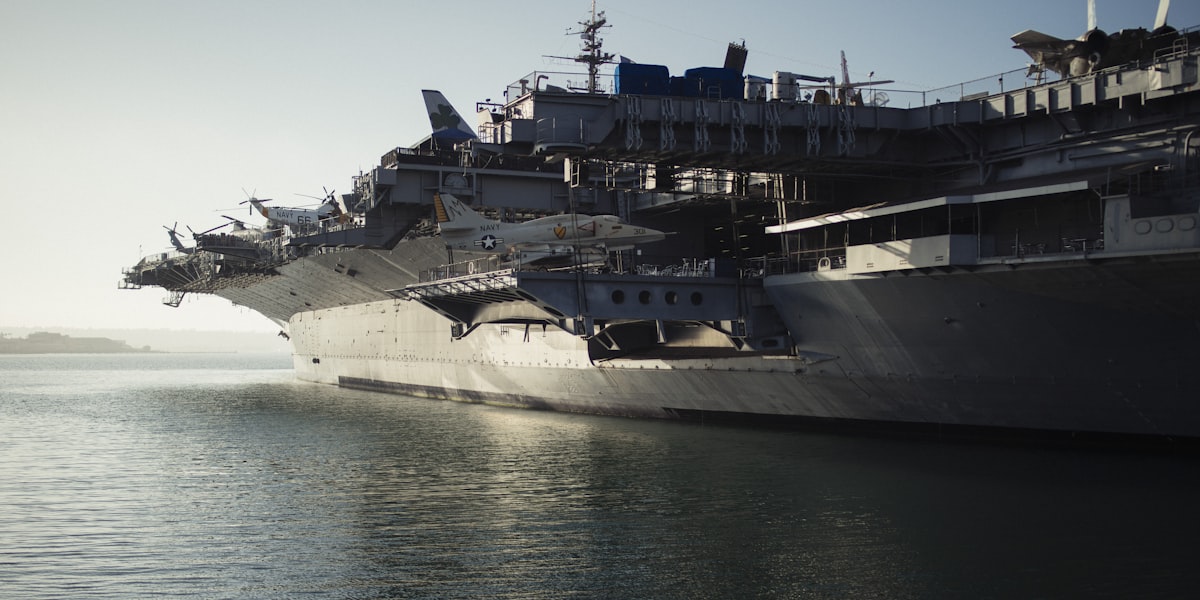
The US Navy has maintained at least one carrier strike group in the region continuously since October 2023. Aegis-equipped destroyers have actively intercepted Iranian and Houthi missiles. American forces are not observers in this theater. They are participants.
The cost is not trivial. US strikes against the Houthis alone are estimated to have consumed hundreds of millions of dollars in munitions. Individual SM-2 and SM-6 interceptor missiles cost $2-4 million each, fired to defend against drones that cost a few thousand dollars.
The Red Sea Problem
The Houthis have demonstrated something that defense planners will study for years: a non-state actor with relatively cheap weapons can effectively hold a critical artery of global commerce hostage.
Since November 2023, Houthi attacks have disrupted Red Sea shipping to a degree not seen in modern history. Container traffic through the Suez Canal dropped sharply. Egypt lost billions in canal revenue. Global shipping costs spiked. Insurance premiums for Red Sea transits soared.
The US-led Operation Prosperity Guardian and subsequent airstrikes degraded some Houthi capabilities but did not stop the attacks. The Houthis absorbed the strikes and continued firing. Their weapons, largely Iranian-designed anti-ship ballistic missiles, cruise missiles, and one-way attack drones, proved capable enough to threaten commercial vessels, even if they rarely sank them.
The strategic lesson is uncomfortable: if a group in Yemen can disrupt 12-15% of global trade with missiles that cost a fraction of the interceptors used against them, the economics of maritime security need rethinking.
Where This Stands
The Middle East in early 2025 is defined by a dangerous convergence:
Iran is weaker conventionally than at any point in decades. Hamas is gutted. Hezbollah is degraded. Its proxy shield has holes. Its direct military exchanges with Israel in 2024 demonstrated capability but also exposed limitations. The vast majority of its projectiles were intercepted.
Iran is stronger on the nuclear front than ever. Breakout time is measured in days. Inspector access is restricted. No diplomatic framework constrains the program. The technical gap between Iran's current position and a weapons capability has never been smaller.
The United States is back to confrontation. Maximum pressure sanctions, no diplomatic channel, a hawkish national security team, and a military presence that is actively engaged in the region.
Israel has demonstrated it can reach anywhere. From Tehran hotel rooms to Beirut bunkers to mountain facilities in Iran. Its intelligence capabilities and willingness to use force have been proven repeatedly.
The question that governs the next phase is straightforward: does Iran, with its proxy deterrent diminished, accelerate toward a nuclear weapon as its ultimate insurance policy? And if it does, what do Israel and the United States do about it?
Nobody in Washington, Tehran, or Jerusalem has a comfortable answer. That is the problem.
Middle EastNuclear ProliferationSanctions
Share
Help us improve
Your feedback shapes the analysis we publish. What interests you most? What would you like to see more of? Let us know.
Please select a rating
Your feedback is sent privately to our editorial team and is never displayed publicly.
Enjoy this analysis? Help keep it independent and ad-free.
The IMF projects 4.4% growth. Marsa Maroc is investing $2.1 billion in ports. A $4 billion hotel boom is underway. Morocco is building faster than any country in Africa, and it has four years to finish.