The Helium Shortage: From Gas Fields to Chip Fabs to Your Next Laptop
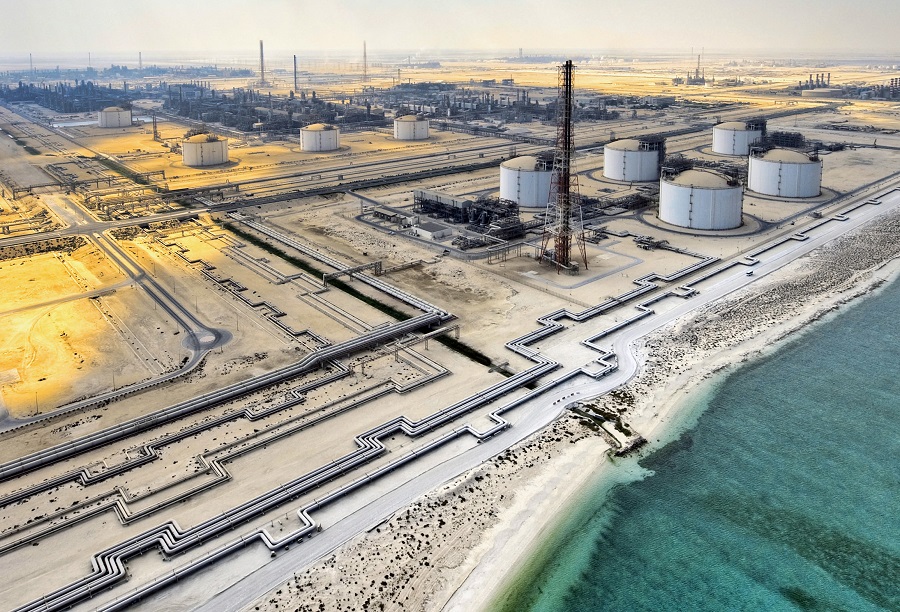
On March 4, 2026, QatarEnergy declared force majeure on its helium deliveries. The trigger was the closure of the Strait of Hormuz to commercial shipping following the outbreak of the Iran war. Qatar, operating out of its Ras Laffan industrial complex, produced approximately 63 million cubic meters of helium in 2025. That was roughly one-third of the world's entire supply.
The gas most people associate with party balloons is, in fact, one of the least substitutable industrial inputs on Earth. Helium cannot be synthesized. It cannot be manufactured. It is extracted as a byproduct of natural gas processing, and when it is released into the atmosphere, it escapes into space. There is no recycling at scale.
In semiconductor manufacturing, helium performs functions that no other element can replicate. This is the story of how a noble gas connects a war in the Persian Gulf to the price of your next laptop, your next phone, and the server powering your next search query.
One-Third of Global Supply, Offline
The numbers are stark. Qatar's 63 million cubic meters represented roughly 33% of global production of approximately 190 million cubic meters. With the Strait of Hormuz closed, the market is missing about 5.2 million cubic meters per month. "If those conditions persist, the market is effectively missing about 5.2 million cubic meters of helium per month," said Aleksandr Romanenko, CEO of IndexBox.
Spot prices doubled within weeks of the crisis onset. European spot helium reached approximately $450 per thousand cubic feet (Mcf). Deutsche Bank described the shift bluntly: the shutdown "removed roughly a third of global helium supply and shifted the market from oversupplied to undersupplied."
The Qatar Outage Removed One-Third of Global Helium Supply
Estimated impact on available supply after QatarEnergy force majeure, March 4, 2026 (million cubic meters). Hover over a bar for details.
Hover over a bar to see details.
Source: Santiago & Company, USGS
The United States is the world's largest helium producer at 81 million cubic meters per year. But the US Federal Helium Reserve, once a strategic buffer, was fully privatized in January 2024. Messer Group acquired the Cliffside facility in Texas for $460 million. The government stockpile now reads: zero.
Russia's Gazprom Amur plant was supposed to become a major new source. Its nameplate capacity is 84.5 million cubic meters. Actual output in 2025: 18 million. Fires, Western sanctions, and persistent underperformance have left the facility operating at a fraction of its design. Algeria produces 11 million cubic meters, Canada 6 million, China 3 million. None of these can compensate for 63 million going offline.
The structural damage extends beyond the immediate disruption. Ras Laffan's LNG Trains 4 and 6, which feed helium extraction, will be offline for an estimated 3-5 years. That represents a 14% structural reduction in Qatar's helium capacity, persisting long after any ceasefire. Exiger, the supply chain intelligence firm, has labeled this "Helium Shortage 5.0": the fifth major helium supply crisis in two decades. The pattern is not new. The helium market has experienced eight supply deficits in seventeen years, none of them resolved by structural diversification.
Eight Supply Deficits in Seventeen Years
Named helium shortage episodes, 2006-2026. Bar widths reflect approximate duration. Hover over an episode for details.
Hover over an episode to see details.
Source: Santiago & Company Analysis, International Helium Association, USGS
What Helium Does Inside a Chip Fab
Helium is essential to semiconductor manufacturing. It performs four functions for which no technically or economically viable substitute exists.
First, wafer cooling. Helium has the highest thermal conductivity of any noble gas. During lithography and etching, chips must be held at precise temperatures. Helium transfers heat away from the wafer surface faster than any alternative.
Second, photolithography carrier gas. In both EUV and DUV lithography systems, helium serves as the carrier gas, maintaining the optical path and preventing contamination. Third, inert atmosphere. Helium provides the non-reactive environment required inside process chambers, preventing oxidation and defects. Fourth, leak detection. Helium's small atomic radius makes it the standard tracer gas for finding microscopic leaks in vacuum systems.
Semiconductors now consume 24% of global helium. That share is projected to reach 30% by 2030, with fivefold growth expected by 2035 as chip geometries shrink and production volumes rise. Semiconductors share that shrinking pool with every other helium-dependent sector. Medical imaging, aerospace, welding, and analytical applications all draw from the same supply.
Availability, rather than price, is the binding constraint. Helium is a relatively small fraction of total chip production cost. A fabrication facility that runs out of helium stops producing. Most chip fabs carry only 3-7 days of helium storage. When supply tightens, defect rates climb, the cost per good die rises, and total output falls. The Semiconductor Industry Association has noted that manufacturers were already running lean on helium before the crisis, with limited room for further efficiency gains.
The Asia-Pacific Exposure
The geography of helium dependency maps directly onto the geography of semiconductor production. South Korea imported 64.7% of its helium from Qatar in 2025. Samsung and SK Hynix, which together dominate global memory chip production, sourced the bulk of their helium from Qatari supplies and hold an estimated 4-6 months of inventory.
TSMC, the world's largest contract chipmaker, is in a more precarious position than initially reported. According to Asian markets analyst Sadi Kaymaz, TSMC has helium reserves sufficient for domestic operations only until mid-May 2026 . The company has reported it may source supplies from the United States, but stock levels are declining . TSMC manufactures nearly all of the world's most advanced chips, including every Nvidia data center GPU. A production slowdown at TSMC would ripple through the entire AI and consumer electronics supply chain.
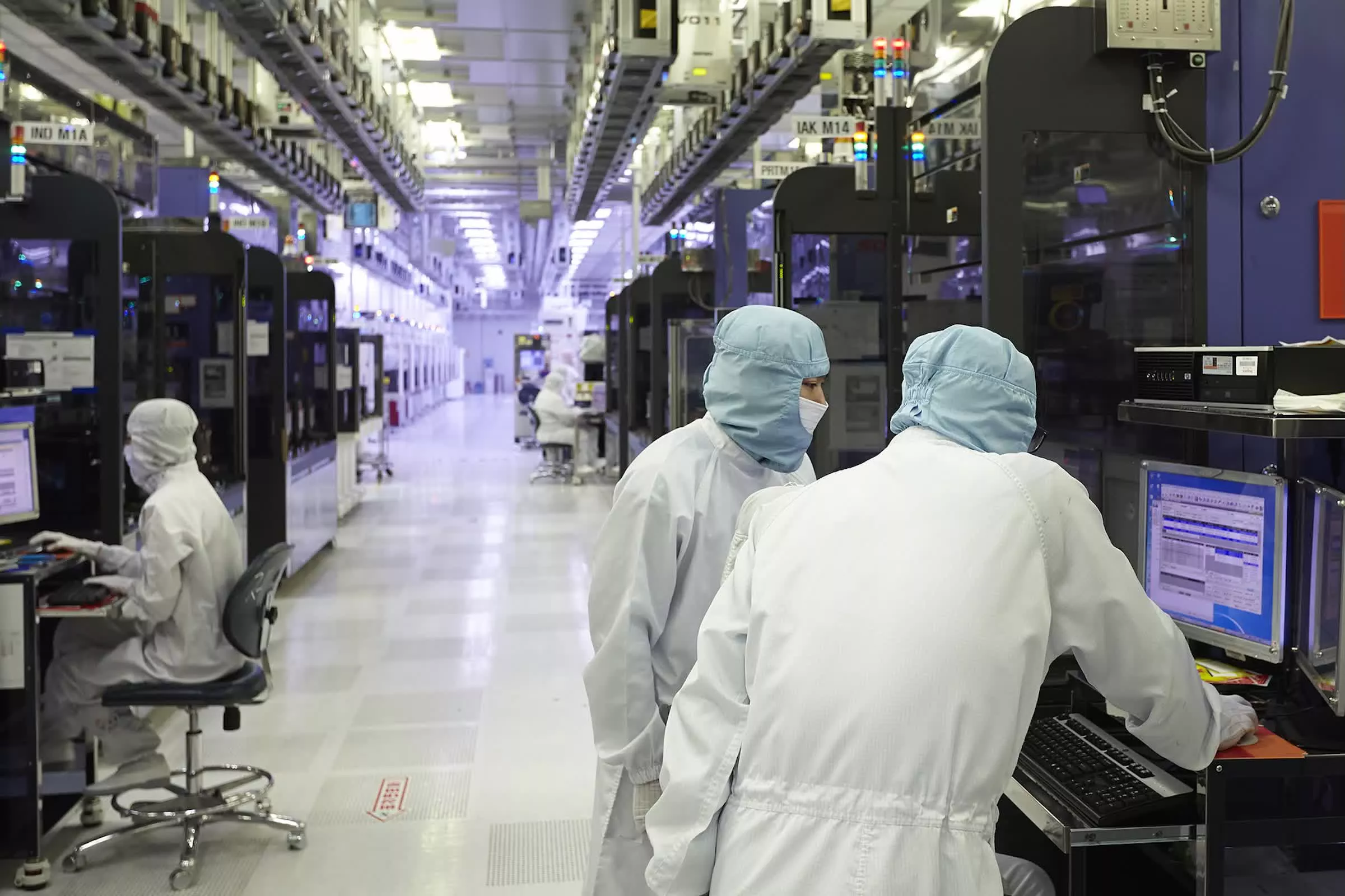
The industry has been adapting. Advanced chip plants can recover 90-95% of the helium they use through recycling systems . Samsung was the first to install such a system, its HeRS platform, saving over 4.7 tonnes per year . More than 70% of advanced fabs in Japan and Taiwan now have recycling capabilities . But recycling reduces fresh demand; it does not eliminate it. And when the fresh supply disappears, recycling alone cannot sustain production.
China imported 4,924 tonnes of helium in 2025. Qatar supplied 54% of that volume. Domestic Chinese production covers only a fraction of demand. Russia-China helium exports rose 60% year-over-year in 2025, but Russia's Amur plant cannot replace Qatari volumes. S&P Global analyst Ralf Gubler warned that Russian helium could "clear into markets like China, tightening supply elsewhere."
The logistics crisis compounds the supply crisis. Rerouting helium shipments around the Cape of Good Hope instead of through the Strait of Hormuz adds 3,500 nautical miles and 10-14 additional days of transit. Each rerouted voyage costs approximately $1 million more in fuel. Liquid helium boils off continuously during transport; longer transit means less usable helium arrives at the destination.
Approximately 200 specialized cryogenic ISO containers are stranded at ports and in transit zones. The global fleet totals only 500-700 such containers. Boil-off renders the cargo inert within 35-45 days. The critical deadline, according to J2 Sourcing: early April 2026, when existing in-transit shipments that left before the closure reach Asian fabs. After that, the pipeline is empty.
What This Means for Consumer Prices
When helium supply tightens, chip fabs triage. Higher-margin sectors get priority: AI accelerators, data center processors, advanced packaging for high-bandwidth memory. Consumer electronics, the lowest-margin category, gets rationed last.
The effects are already visible in one product category. Hard disk drives at 10TB and above, which require helium-filled enclosures, have seen prices surge 20-50% since mid-2025. Seagate and Western Digital announced 20-30% price increases in March 2026.
The chip impact is broader. DRAM, NAND Flash, high-bandwidth memory, and logic chips at all advanced nodes require helium during fabrication. When defect rates rise because of imprecise cooling or contaminated process chambers, fewer good dies come off each wafer. The cost per surviving chip rises. That cost flows downstream through module makers, device assemblers, and retailers.
The critical insight: helium is a small input cost, but a binary constraint. A fab with helium runs. A fab without it stops. Reduced fab output means reduced chip supply. Reduced chip supply, against steady or rising demand, means higher prices for laptops, smartphones, servers, automobiles, and every other product that contains a semiconductor.
The timing matters. Distributor inventory buffers are projected to deplete between May and July 2026. Until then, the shortage is buffered. After that, it arrives at factory gates.
The Recovery Timeline
Even an immediate ceasefire would not restore helium supply quickly. The physical infrastructure at Ras Laffan has sustained damage. LNG Trains 4 and 6, major feedstock sources for helium extraction, face 3-5 years offline. That alone locks in a 14% structural reduction in Qatar's helium output.
Santiago Company, a specialist helium market analyst, projects a 15% global helium deficit persisting through 2026-2027, independent of the war's duration. New helium production infrastructure requires at least 18 months of lead time from decision to first output.
The logistics recovery is equally constrained. The approximately 200 stranded cryogenic containers face a hard physical deadline: boil-off renders their contents inert within 35-45 days. Many of those containers have already passed that window. Restoring the container fleet to normal circulation requires the Strait of Hormuz to reopen, workers and port services to return, and shipping lanes to be re-insured.
Recovery, at minimum, requires a sequence: ceasefire, Hormuz reopening, workforce return, logistics normalization, and then months of ramp-up at damaged facilities. Each step depends on the one before it.
The SIA has noted that chipmakers were already operating with minimal helium slack before this crisis. There is little efficiency left to squeeze. Exiger's label, "Helium Shortage 5.0," reflects a pattern: the helium market has experienced five major supply crises in two decades, each one exposing the same structural fragility. Production is concentrated in a few countries. Storage is minimal. There is no substitute. And demand from the semiconductor sector continues to grow.
The shortage has already begun affecting chip production. At Semicon China in late March, Cameron Johnson, senior partner at Tidal Wave Solutions, was direct: "A helium shortage is an absolute concern. As there's a shortage, companies might start slowing production or ultimately shutting production down, making chips."
The inventory buffers that have shielded consumers so far run out between May and July. After that, the shortage stops being a supply chain story and becomes a price tag.

Achraf Rachidi
Independent researcher. Aperta Res was born from a simple frustration: too much noise, not enough signal. The goal is transparent, data-grounded analysis that cuts through complexity.
LinkedInHelp us improve
Your feedback shapes the analysis we publish. What interests you most? What would you like to see more of? Let us know.
Your feedback is sent privately to our editorial team and is never displayed publicly.